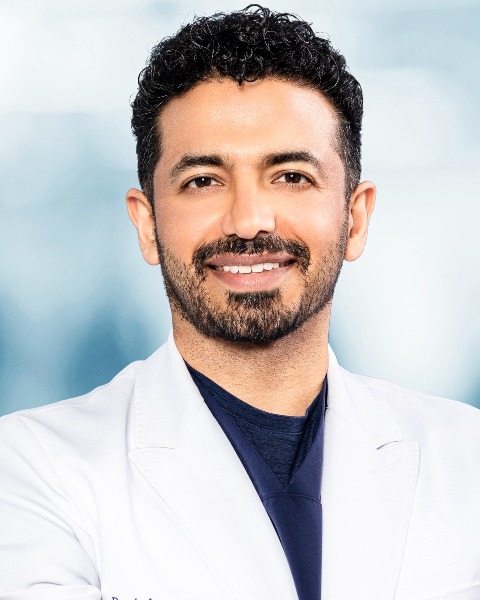
Resident - MSc Oral implantology Jacksonville university Chicago, Illinois, United States
Purpose of the Study: Statement of the Problem: A Timely Challenge Implant and surgical dentistry demand precise diagnosis, risk evaluation, and treatment planning for predictable outcomes. Yet, clinicians face fragmented workflows—interpreting CBCT scans, reviewing complex medical histories, and generating documentation—that are time-consuming and prone to error. Surgical dentistry also accounts for one of the highest instances of malpractice lawsuits (1), (2), (3), underscoring the urgent need for tools that improve accuracy, efficiency, and patient safety. While medicine has rapidly adopted artificial intelligence (AI), dentistry lags, leaving a gap that AI integration is well-positioned to close.
Methods:
Description: Enhancing Care Through Responsible AI This table clinic demonstrates how AI, used as an adjunct - not a replacement - enhances implant and surgical workflows while preserving clinician critical thinking. Attendees will see how AI supports: - Prosthetically driven, facially generated treatment planning - Interpretation of CBCT and panoramic radiographs - Risk stratification from medical histories - Precise 3D implant planning - Documentation support (SOAP notes, referrals, insurance narratives) - Evidence-based chairside care, delivering the latest peer-reviewed research instantly to strengthen patient communication and bridge research to practice. - Case examples and models will illustrate practical applications that save time, reduce errors, and streamline case management. - Here is a link to an example of what an AI start-up can do - Trust AI - dental co-pilot
Results: 1. Patient-Centered Outcomes Beyond efficiency, AI enhances trust by giving patients research-backed answers, confidence in their clinician's up-to-date knowledge, and assurance of safer, personalized surgical care.
2. Educational Value and Ethical Responsibility This clinic emphasizes AI's role as an educational and supportive tool. It highlights responsible adoption—avoiding misuse or over-reliance—while reinforcing dentist oversight and accountability.
3. The Human-Centered Future of AI This clinic focuses on the responsible adoption of AI. It underscores the importance of a human-in-the-loop approach, reinforcing the dentist's ultimate accountability and preventing misuse. We will highlight AI's role as a supportive and educational tool that strengthens, not replaces, clinical judgment.
Conclusion: A Call to Leadership: Integrating AI into surgical workflows is a proactive step toward minimizing errors, bolstering risk management, and advancing evidence-based, patient-centered care. By leading this integration, dentists can position themselves at the forefront of safe, ethical, and innovative surgical practice.
Articles: ADA Council on Dental Practice. Malpractice Claims Analysis in Dentistry. ADA Professional Liability Reports. 2022.
Glick M, Williams DM, Kleinman DV, Vujicic M, Watt RG, Weyant RJ. FDI Vision 2030: Delivering Optimal Oral Health for All. Int Dent J. 2021;71(1):3-12. doi:10.1111/idj.12601
Topol EJ. High-performance medicine: the convergence of human and artificial intelligence. Nat Med. 2019;25:44-56. doi:10.1038/s41591-018-0300-7